What Your Fire’s Flame Color Can Tell You
When homeowners choose an HPC Fire Inspired® outdoor gas fire feature, they naturally focus on flame height, shape, movement, and overall appearance. HPC Fire engineers intentionally curate each aspect of every fire design. In this tech talk, the HPC Team will delve into the meaning of flame color. Flame color can reveal something more important—it can provide insight into how the fire feature is performing.
Flame color is not simply an aesthetic characteristic. It is influenced by the relationship between fuel, oxygen, gas pressure, burner design, and the type and placement of fire media. A flame that appears blue, yellow, orange, or a combination of colors can offer valuable clues about the combustion process occurring within the fire feature.
Understanding these visual cues can help homeowners recognize when a flame is behaving as intended and when changes in flame color may call for a closer look at the system.
What Creates Flame Color?
Flame appearance is the visible expression of the combustion process and is influenced by several interacting factors, including gas flow, air entrainment, burner geometry, operating pressure, and the interaction between the flame and fire media.
To better understand what flame color can reveal about fire performance, it is helpful to begin with the fundamentals of combustion. A gas fire depends on three essential elements:
- Fuel
- Oxygen
- Ignition energy
When natural gas or propane mixes with air and is ignited, combustion occurs, producing heat and light. The amount of available oxygen and how effectively it mixes with the fuel directly influence how that combustion appears. In simple terms, combustion is the interaction of three essential elements: fuel, atmospheric air, and an ignition source.
The visible flame is therefore more than simply burning gas. It is the result of a carefully controlled combustion process in which fuel and oxygen interact under specific conditions to produce the flame characteristics we see.
Why Are Some Flames Blue?
A blue flame generally indicates that gas is well mixed with oxygen, supporting efficient combustion. This is why many household gas appliances produce predominantly blue flames.
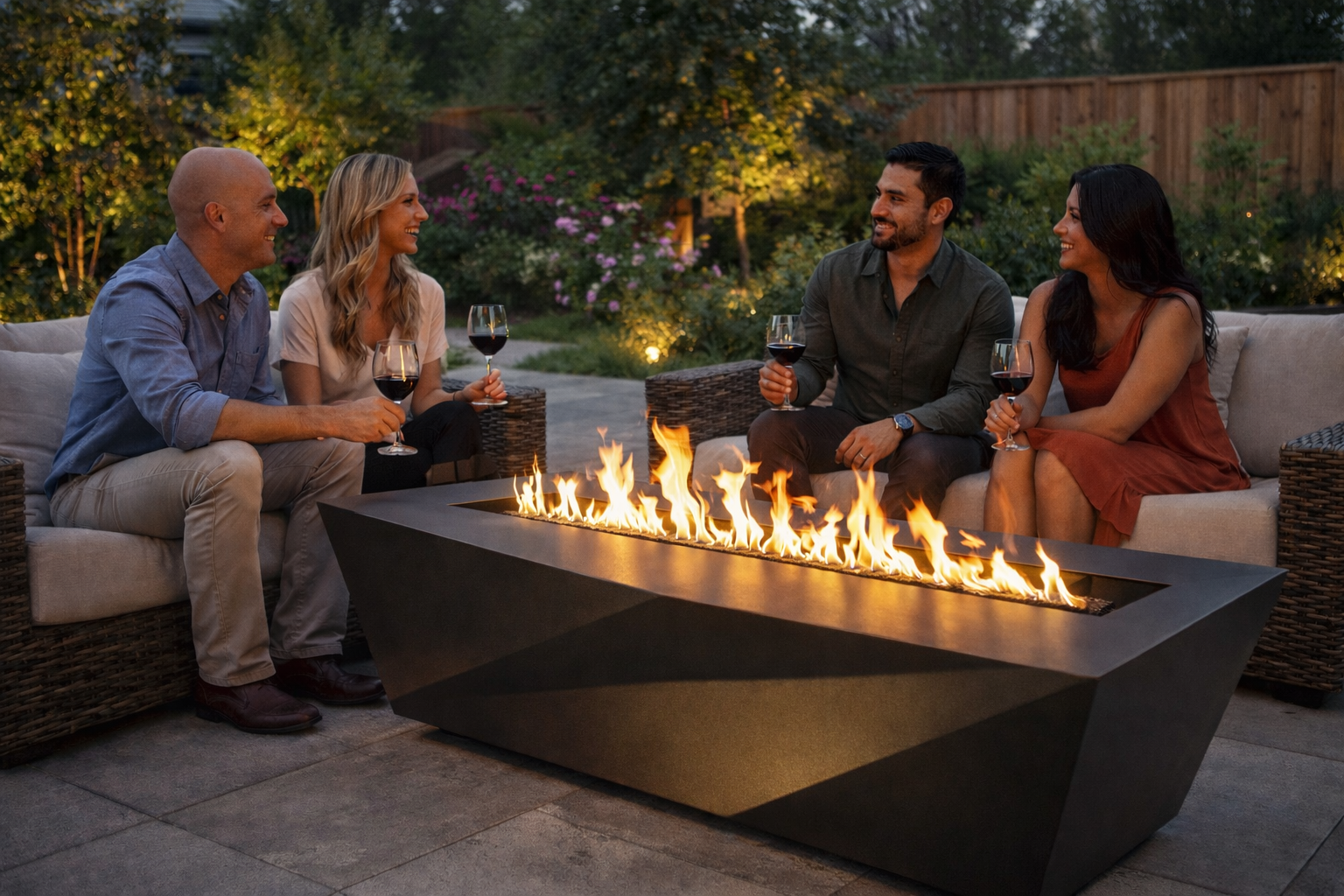
For outdoor decorative fire features, however, the goal is different. HPC Fire Inspired® burners are engineered to produce a natural orange-to-yellow flame that resembles a traditional campfire—not simply the bluest flame possible.
The objective is a controlled, stable, visually appealing flame that provides the desired appearance while maintaining proper combustion
Why Do Outdoor Fire Pits Often Have Yellow or Orange Flames?
The familiar yellow-orange campfire appearance results from heated particles within the flame that emit visible light. This is one reason decorative gas fire features are engineered differently from appliances designed primarily to produce a blue flame.
The goal is to balance proper combustion with the desired flame appearance.
HPC Design Philosophy
A beautiful flame is not created simply by increasing gas flow. It comes from carefully balancing fuel delivery, air entrainment, burner geometry, and fire media to produce a controlled, stable flame with the desired characteristics.
Air-to-Fuel Ratio: A Key Factor in Flame Color
The balance between fuel and air plays a major role in flame color and behavior.
More Air Can Produce a Bluer
When more oxygen is mixed with the fuel, combustion can become more complete, often producing a bluer flame. This is especially relevant in propane systems that use an air mixer or venturi to introduce air into the gas stream.
Less Air Can Produce a More Yellow Flame
With less air mixed into the fuel before combustion, the flame can appear more yellow or orange—an appearance that is often desirable in decorative fire features.
However, a yellow flame should result from intentional burner design, not from restricting oxygen or creating poor combustion. Proper burner configuration is essential to achieving the desired flame appearance while maintaining safe, consistent performance.
What Happens When the Air Mixture Is Wrong?
This is where flame color becomes particularly useful as a diagnostic clue. If the air-to-fuel mixture changes unexpectedly, the flame may change in:
- Color
- Height
- Shape
- Stability
- Sound
- Heat output
Excessive Air
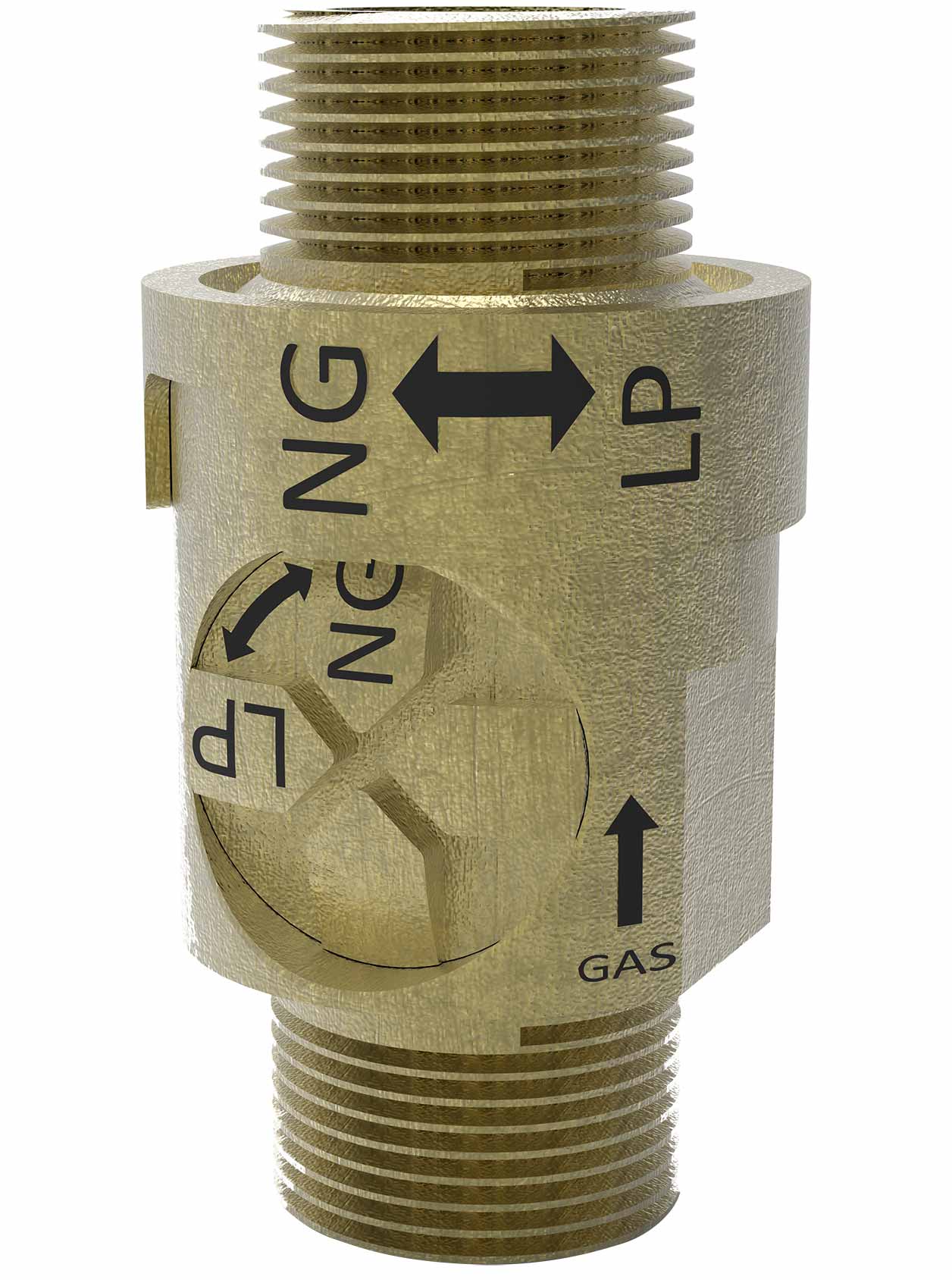
Too much air can produce a flame that appears unusually blue, sharp, or less visible. This can occur when an appliance is not configured for its’ fuel type, allowing excessive air into the combustion process.
This is not a flame-color adjustment—it is an installation or configuration issue that needs to be corrected.
Insufficient Air
Too little air can contribute to incomplete combustion, resulting in lazy, yellow, or unstable flames and potentially increased soot or carbon buildup.
The key is to recognize changes in flame appearance. If a flame suddenly looks significantly different from its normal operation, the root cause of the change should be investigated.
Gas Pressure Also Affects Flame Color
Air is not the only variable. Gas pressure and flow also influence combustion. Too little pressure can result in weak or uneven flames. Excessive pressure can produce unstable flames and other abnormal operating characteristics.
This is why flame color should never be evaluated by itself. A change in color accompanied by a change in flame height, stability, or sound may indicate a change in the gas delivery system.
HPC TROUBLESHOOTING TIP:
If flame color changes significantly from the appliance’s normal appearance, evaluate the complete system—including fuel type, pressure, air mixing, burner condition, and media—rather than assuming color alone identifies the cause.
Fire Media Can Change Flame Color
A flames operation does not happen in isolation. Fire media can affect what the homeowner sees.
As the flame passes through fire glass, lava rock, ceramic media, or logs, the media can influence the appearance of the flame by reflecting light, retaining heat, and interacting with combustion byproducts.
Different media can therefore produce different visual characteristics even when the same burner is being used.
Moisture in fire media can also affect flame appearance. Porous materials such as lava rock can retain moisture, which is then released as the media heats. As a result, the flame may look different during startup than it does once the fire feature reaches its normal operating temperature.
Flame Color as a Troubleshooting Tool
Flame color can provide useful information, but it should be treated as a clue—not a diagnosis.
Predominantly Blue Flame
- High air-to-fuel ratio
- Startup air in the gas line
- Incorrect fuel configuration
- Incorrect orifice configuration
Yellow or Orange Flame
- Normal decorative flame characteristics
- Incandescent particles within the flame
- Media interaction
- Changes in air-to-fuel ratio
Lazy Yellow Flame With Soot
- Incomplete combustion
- Restricted airflow
- Excessive flame impingement
- Incorrect gas pressure
- Burner obstruction
Sudden Change in Flame Color
- Gas pressure changes
- Air mixture changes
- Burner condition
- Media changes
- Fuel configuration
- Environmental conditions
These observations should always be evaluated in the context of the specific appliance.
The HPC Approach: Engineering the Flame, Not Just the Fire
At HPC Fire Inspired®, flame color is one part of a much larger engineering equation. The objective is not simply to burn gas. It is to control the interaction between:
FUEL + PRESSURE + AIR + BURNER GEOMETRY + MEDIA + IGNITION = FLAME PERFORMANCE
When these factors are properly balanced, they produce a stable, consistent, and visually appealing flame suited to the design of the fire feature. HPC’s engineering approach focuses on controlling those variables rather than relying solely on higher BTU output.
HPC ENGINEERING CALLOUT:
The best flame is not necessarily the biggest, hottest, or bluest flame. It is the flame produced by a properly engineered system in which fuel, air, pressure, burner geometry, and media work together.
The Bottom Line
Flame color can reveal valuable information about an outdoor gas fire feature, but it must be evaluated as part of the complete combustion system. At HPC Fire Inspired®, flame performance starts with intentional burner engineering. Gas delivery, pressure, air entrainment, burner geometry, ignition, and fire media all work together to create the flame homeowners see.
The flame may be the most visible part of the fire feature, but the engineering behind it is what delivers the desired appearance, consistent performance, and reliable operation