Fuel selection is a foundational consideration in the design of any complete outdoor fire feature. HPC offers a comprehensive range of CSA-certified outdoor fire appliances engineered for both natural gas and propane applications, providing the flexibility to match the fuel source to the specific requirements of each project.
When designing an outdoor gas fire pit, one of the most important decisions is determining whether natural gas or propane is the appropriate fuel source. While both can provide consistent, visually appealing flame performance, each has distinct characteristics that influence gas pressure, fuel supply, line sizing, burner performance, installation requirements, and overall system design.
For homeowners, landscape designers, contractors, and professional installers, understanding these differences early in the design process helps ensure the fire feature is properly specified, efficiently installed, and engineered for reliable performance. In this tech talk, our experts provide factors to consider when selecting your fuel source.
Natural Gas vs. Propane: What’s the Difference?
Natural gas and propane are both widely used to fuel outdoor fire features; however, the two fuel sources have distinct operating characteristics and require the appliance to be properly configured for the selected fuel. Key considerations include:
- Gas pressure
- Energy content
- Gas line sizing and supply requirements
- Regulator configuration
- Fuel availability
- Storage and delivery
- Burner orifice sizing
These differences make proper fuel configuration essential to achieving safe, consistent, and reliable burner performance. An appliance designed for natural gas should never be connected to propane, or vice versa, without confirming that the burner and gas-control system are correctly configured for the intended fuel.
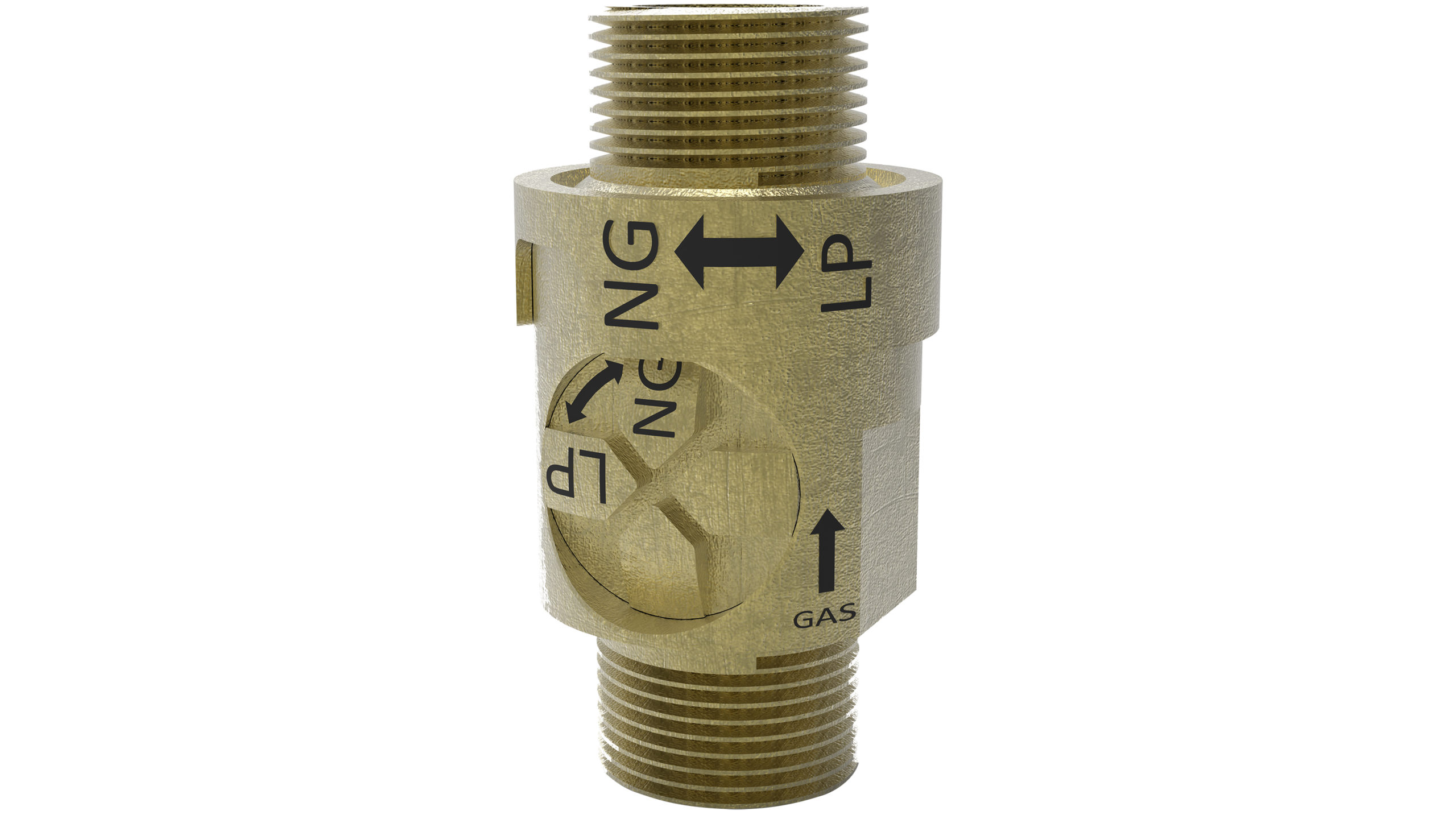
HPC Fire Inspired’s Universal Gas Orifice (UGO) provides added flexibility during appliance configuration. The UGO allows an appliance to be prepared for either natural gas or propane quickly and efficiently by simply changing the set screw to accommodate the appropriate fuel. This innovative design can streamline installation and inventory management while providing installers with greater flexibility when adapting appliances to the fuel source required for a specific project
Natural Gas Fire Pits
Natural gas is supplied through a permanent utility connection, making it an ideal fuel source for outdoor fire features intended to remain in a fixed location. One of its primary advantages is convenience: once the gas line has been properly installed and sized, homeowners can enjoy their fire feature without the need to transport, store, or replace fuel tanks.
Natural gas is also lighter than air, which means that in the event of a leak, it generally rises and disperses rather than accumulating at ground level. These characteristics make natural gas a practical and convenient option for many permanent outdoor fire feature installations.
Natural Gas Pressure
Gas pressure is one of the most critical technical considerations when specifying and installing an HPC Fire Inspired outdoor fire feature. For natural gas applications, HPC identifies an operating range of approximately 3.5″ to 7″ water column (WC), with 6″ WC recommended for optimal performance according to its gas fundamentals guidance. Water column (WC) is the standard unit of measurement used to express the relatively low gas pressures required by residential and outdoor gas appliances.
Proper gas pressure is essential for maintaining consistent combustion, reliable ignition, and optimal flame performance. Insufficient pressure may result in reduced flame height, poor flame presentation, ignition difficulties, pilot dropout, and inconsistent operation. Conversely, excessive gas pressure can contribute to overly tall or unstable flames, excessive noise, potential gas valve damage, and improper appliance operation.
Gas pressure should therefore be viewed as a critical component of the overall system—not simply a specification listed on a data sheet. It directly influences flame height, ignition reliability, combustion performance, and the overall operation of the fire feature. HPC recommends that gas pressure be properly verified during installation to ensure the appliance is operating within the specified range rather than assuming the available supply pressure is adequate.
Propane Fire Pits:
HPC Fire Inspired’s current gas fundamentals guidance identifies an LP operating pressure range of approximately 11″ to 14″ water column (WC). Propane systems typically operate at a higher appliance pressure than natural gas systems, making proper pressure regulation and appliance configuration essential for safe, consistent, and reliable performance.
This difference in operating pressure is an important consideration when selecting the appropriate burner, gas valve, regulator, and related control components. Properly matching these components to the selected fuel source helps ensure the fire feature operates as designed and delivers consistent flame performance.
BTUs: Does Propane Produce More Heat?
Propane contains a higher energy content per unit of volume than natural gas, which allows properly designed propane systems to deliver substantial heat output. However, BTU rating alone does not determine the visual appeal, efficiency, or overall performance of an outdoor fire feature.
Flame performance is the result of several components working together, including burner design, gas pressure, orifice sizing, gas flow, burner geometry, and available fuel supply. Simply increasing BTU output does not necessarily produce a better-looking or better-performing fire. Instead, careful burner geometry and combustion engineering are essential to producing the full, natural-looking flame pattern homeowners expect.
HPC Fire Inspired emphasizes the importance of thoughtful burner engineering rather than relying solely on increased BTU output. A properly engineered burner can deliver a fuller, more stable, and visually appealing flame while maintaining efficient gas consumption and consistent performance.
What About Small Propane Tanks?
Propane contains a higher energy content per unit of volume than natural gas, which allows properly designed propane systems to deliver substantial heat output. However, BTU rating alone does not determine the visual appeal, efficiency, or overall performance of an outdoor fire feature.
Flame performance is the result of several components working together, including burner design, gas pressure, orifice sizing, gas flow, burner geometry, and available fuel supply. Simply increasing BTU output does not necessarily produce a better-looking or better-performing fire. Instead, careful burner geometry and combustion engineering are essential to producing the full, natural-looking flame pattern homeowners expect.
HPC Fire Inspired emphasizes the importance of thoughtful burner engineering rather than relying solely on increased BTU output. A properly engineered burner can deliver a fuller, more stable, and visually appealing flame while maintaining efficient gas consumption and consistent performance.
Why Burner Orifice Size Matters
One of the most important technical distinctions between natural gas and propane is proper orifice sizing. The orifice regulates the volume of gas delivered to the burner and must be precisely matched to the specific appliance configuration. Proper sizing takes into account several critical factors, including:
- Fuel type
- Gas pressure
- Desired BTU output
- Burner size and design
- Desired flame characteristics
- Overall appliance configuration
HPC Fire Inspired’s engineering team carefully matches orifice sizing to the intended appliance and operating conditions. Orifice selection may also account for variables such as burner dimensions, BTU capacity, available gas-line pressure, fuel type, and barometric pressure. Properly sizing the orifice helps ensure the burner receives the appropriate gas flow for consistent combustion, reliable ignition, and optimal flame performance.
For this reason, converting an appliance from natural gas to propane—or vice versa—should never be treated as simply changing the fuel connection. The appliance must be properly configured for the selected fuel, including the appropriate orifice and gas-control components, to ensure safe and reliable operation.
Gas Line Sizing Is Critical
Whether an outdoor fire feature is fueled by natural gas or propane, the gas supply system must be properly sized to deliver the required volume of fuel at the appropriate operating pressure. When planning gas lines for a fire feature, HPC Fire Inspired identifies six key factors that should be evaluated:
- Gas system pressure
- Fuel type
- Maximum appliance BTU requirement
- Distance from the gas source to the fire feature
- Number of appliances connected to the gas line
- Type and size of piping
Proper gas-line sizing is essential to maintaining adequate flow and pressure throughout the system. An undersized gas line can restrict fuel delivery and create pressure-related performance issues, even when sufficient pressure is available at the gas source. The result can be a fire feature with a high-rated BTU capacity that is unable to achieve its intended flame height, appearance, or overall performance.
HPC Tech Tip: Size the gas supply system for the complete installation—not simply for the burner. Considering the entire system from the fuel source to the appliance helps ensure consistent gas delivery and reliable fire feature performance.
Natural Gas or Propane: Which Is Better?
There is no one-size-fits-all answer when selecting between natural gas and propane. The right fuel source depends on the property’s existing infrastructure, the location and design of the fire feature, the available fuel supply, and the requirements of the specific appliance.
Natural gas may be the ideal choice when:
- A permanent natural-gas connection is readily available.
- The fire feature will remain in a fixed location.
- Convenience and continuous fuel availability are priorities.
- The property has an appropriately sized natural-gas supply.
Propane may be the preferred choice when:
- Natural gas is not available.
- Greater installation flexibility is required.
- A tank-based fuel supply is preferred.
- The project is located beyond existing utility gas infrastructure.
Ultimately, the best fuel source is the one that aligns with the property’s infrastructure, the desired fire feature, and the specifications of the selected appliance.
HPC Fire Inspired offers a broad range of fire feature solutions designed to accommodate a variety of applications, fuel sources, burner configurations, ignition systems, and BTU requirements. From custom burner systems to complete fire pit enclosures, HPC provides the flexibility needed to create a system tailored to the specific requirements of each project.
For example, the HPC Agni fire pit is available with electronic ignition or match-lit controls and offers BTU outputs ranging from 65,000 to 140,000 BTU, utilizing HPC’s signature Penta Burner technology. This level of configuration allows designers and installers to select the appropriate combination of fuel source, burner, ignition system, BTU output, and enclosure to meet the demands of the project.
The Importance of Proper System Design
Both natural gas and propane can provide exceptional performance in an outdoor gas fire feature. The key consideration is not simply which fuel to select, but how the entire system is engineered around that fuel.
Gas pressure, fuel flow, orifice sizing, burner geometry, BTU requirements, gas-line sizing, and ignition technology all work together to determine the final performance of the fire feature. Each component must be properly matched to the selected fuel source and appliance to achieve reliable operation, consistent combustion, and the desired flame presentation.
The overall takeaway is simple: fuel selection is the starting point—not the end point—of proper fire feature design. A high-performing fire feature depends on a complete system in which the fuel source, gas supply, pressure, controls, orifice, burner, and ignition components are properly specified and engineered to work together.
That is where proper engineering makes the difference. HPC Fire Inspired focuses on controlling the critical elements of combustion—including fuel delivery, gas pressure, flow, and burner geometry—to produce a flame that is not only visually appealing, but also consistent, reliable, and engineered for performance.
Whether the project calls for natural gas or propane, selecting the appropriate HPC system—and installing it according to the applicable appliance instructions, fuel-gas codes, and local requirements—provides the foundation for a fire feature designed to perform beautifully for years to come.