When evaluating a gas-fired fire pit, many homeowners, designers, and even contractors immediately focus on one specification: BTU rating. While BTUs are certainly important, they only tell part of the story. From an engineering perspective, the true performance of a fire feature is determined not simply by how much gas is burned, but by how effectively the burner system manages combustion, distributes fuel, and shapes the flame.
At HPC Fire Inspired, burner engineering is viewed as the foundation of flame quality, reliability, safety, and overall customer experience. A well-designed burner can produce a fuller, more attractive, and more stable flame using fewer BTUs than a poorly engineered system with significantly higher gas consumption. In outdoor fire design, burner geometry often matters more than raw input rating.
Understanding BTUs: What They Actually Measure
BTU refers to British Thermal Unit which is a measurement of heat energy. 1 BTU will raise 1lb of water 1 degree. An appliance BTU rating is the amount of fuel energy consumed per hour.
For example:
· 200,000 BTUs = 200,000 units of heat energy consumed per hour.
· The higher the BTU rating the more fuel usage and heat output the appliance is capable of
However, BTUs alone do not measure flame appearance flame height consistency, heat distribution, wind resistance, combustion, flame fullness, and ignition reliability. This is where HPC’s burner engineering becomes critical.
The Difference Between Heat Output and Flame Performance
A common misconception in the outdoor fire industry is that “more BTUs equals a better fire.” However, two burners with identical BTU ratings can produce dramatically different flame presentations. There are several factors that influence flame presentations:
Flame Factors:
· Burner port sizing
· Port spacing
· Gas velocity
· Air entrainment
· Burner shape
· Pan design
· Media interaction
· Fuel distribution balance
An HPC engineered burner system controls these variables to optimize combustion behavior and visual performance.
Burner Port Design: Small Details, Big Impact
One of the most important engineering factors in flame performance is the burner port configuration.
Port Size and Flame Stability:
Burner ports that are too large may create:
· Excessive flame lifting
· Uneven ignition
· Poor fuel distribution
· Flame separation in windy conditions
Ports that are too small may:
· Restrict gas flow
· Create weak flame presentation
· Increase carbon buildup risk
Precision port sizing allows the burner to maintain:
· Stable combustion
· Balanced flame height
· Consistent ignition across the burner
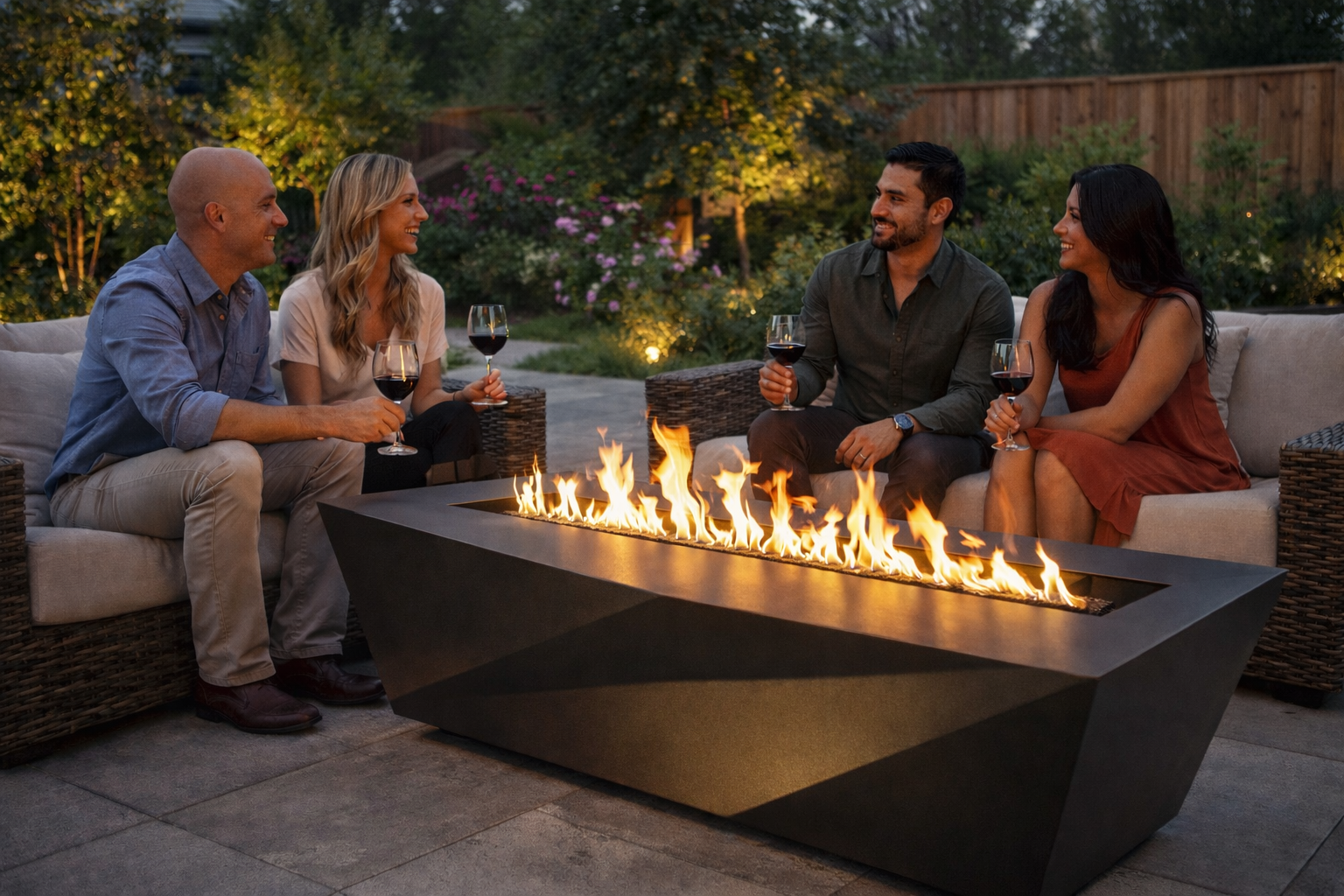
This is particularly important in large linear fire features where flame consistency and ignition propagation becomes more difficult over longer burner lengths.
Ignition Propagation: The Hidden Engineering Feature
One overlooked aspect of burner performance is Ignition propagation. Ignition propagation refers to the ability of the flame to quickly travel across the burner during ignition.
Poor ignition propagation can lead to safety issues such as:
· Delayed ignition
· Unlit burner sections
· Flash ignition events
· Customer dissatisfaction
At HPC, every burner is engineered and rigorously tested to deliver fast, reliable ignition performance while minimizing delayed ignitions and flash ignition events. These enhanced safety measures help ensure both customer satisfaction and operational safety. From match-lit systems to advanced electronic ignition, each unit incorporates thoughtful design features that improve efficiency and overall performance. HPC’s commitment to precision engineering and attention to detail results in the consistent reliability of every appliance, especially in demanding outdoor environments where conditions such as high winds can affect performance.
Combustion Efficiency Matters More Than Raw Fuel Input
The results of an efficient burner design produces:
· Cleaner combustion
· Better flame coloration
· Reduced soot
· Improved fuel economy
· Lower carbon buildup
With a poorly engineered burner you may consume more gas while producing:
· Lazy flames
· Excessive yellowing
· Incomplete combustion
· Carbon deposits on media
The objective is not maximum fuel consumption, but optimized combustion efficiency. At HPC, our burner systems are engineered to precisely balance fuel flow, oxygen interaction, flame aeration, and thermal distribution to create a flame that is visually dynamic, stable, and consistently hot.
Why Media Compatibility Is Important
Fire media is not simply decorative — it directly affects burner performance.
Different media types alter:
· Heat retention
· Airflow around the burner
· Flame reflection
· Combustion behavior
An engineered burner system by HPC is designed with media interaction in mind. This is why burner pan design and media depth recommendations are critical components of a complete fire system.
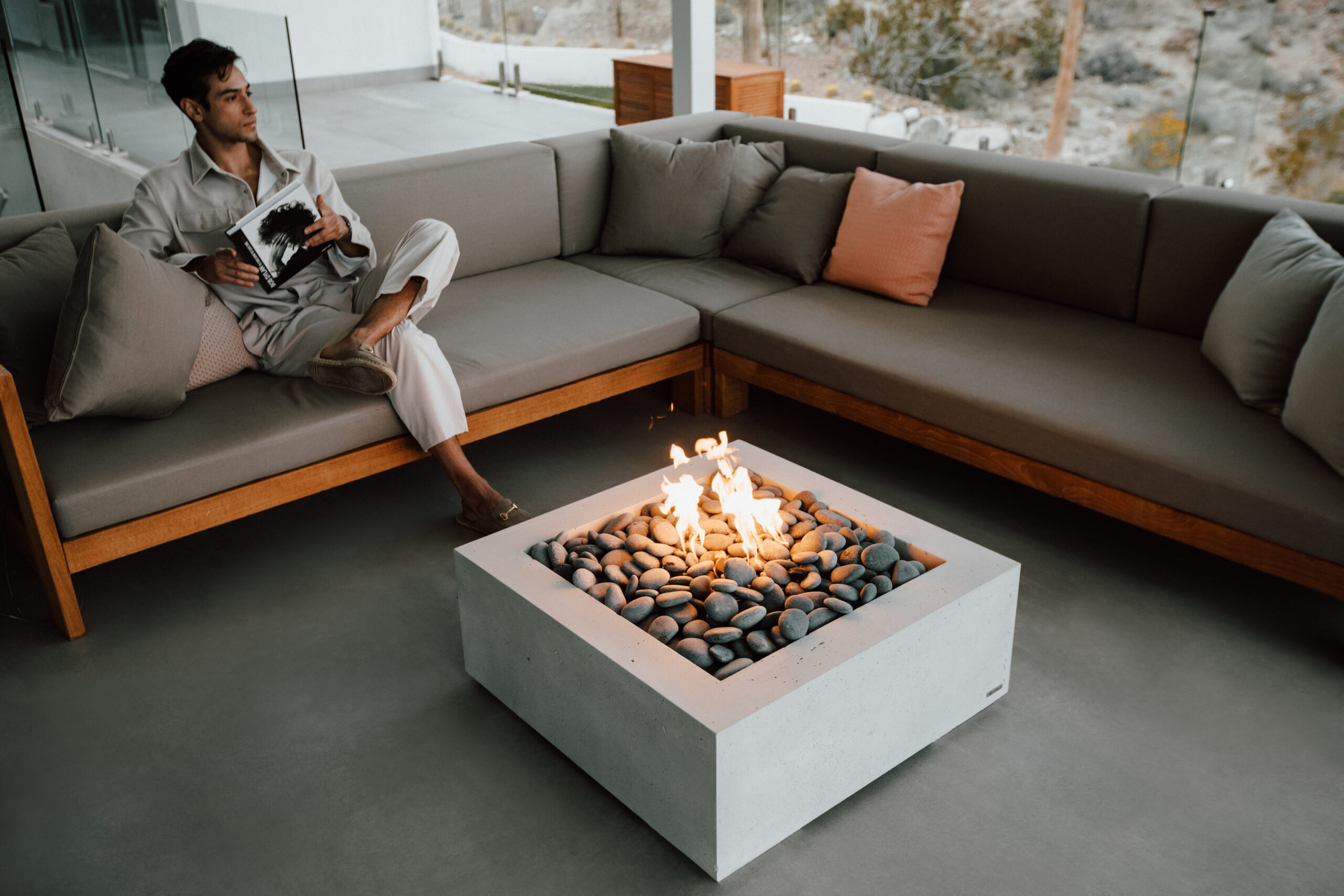
For example, Fire glass requires proper airflow beneath the media layer, Lava rock changes flame diffusion patterns and overfilled media can restrict combustion oxygen and cause unnecessary dropouts.
The HPC Engineering Perspective
At HPC Fire Inspired, burner systems are engineered as complete combustion platforms—not simply gas delivery components. Rather than focusing exclusively on maximizing BTU output, HPC designs every burner to elevate the overall fire experience through a balance of performance, efficiency, and reliability. Our engineering priorities include stable flame performance, dependable ignition, efficient combustion, enhanced flame aesthetics, long-term durability, and resilience in demanding outdoor environments.
In a premium outdoor fire feature, the best flame is not necessarily the one that consumes the most fuel—it is the one engineered to deliver consistent, beautiful, and safe performance in real-world outdoor conditions.
BTU ratings may be easy to market because they reduce performance to a single number, but experienced designers, installers, and engineers know that true flame quality depends on far more than fuel input alone. Superior fire feature performance is the result of precise burner geometry, advanced combustion engineering, balanced fuel distribution, and dependable ignition systems.
At HPC Fire Inspired, every burner is engineered to transform fuel into a purposeful flame experience; delivering warmth, ambiance, safety, and lasting visual impact. In today’s outdoor fire designs, it is the quality of the burner engineering that distinguishes a basic flame from a premium fire feature. Choosing HPC gives consumers confidence that every performance variable has been carefully considered to ensure reliable operation, exceptional flame presentation, and durability that stands the test of time.