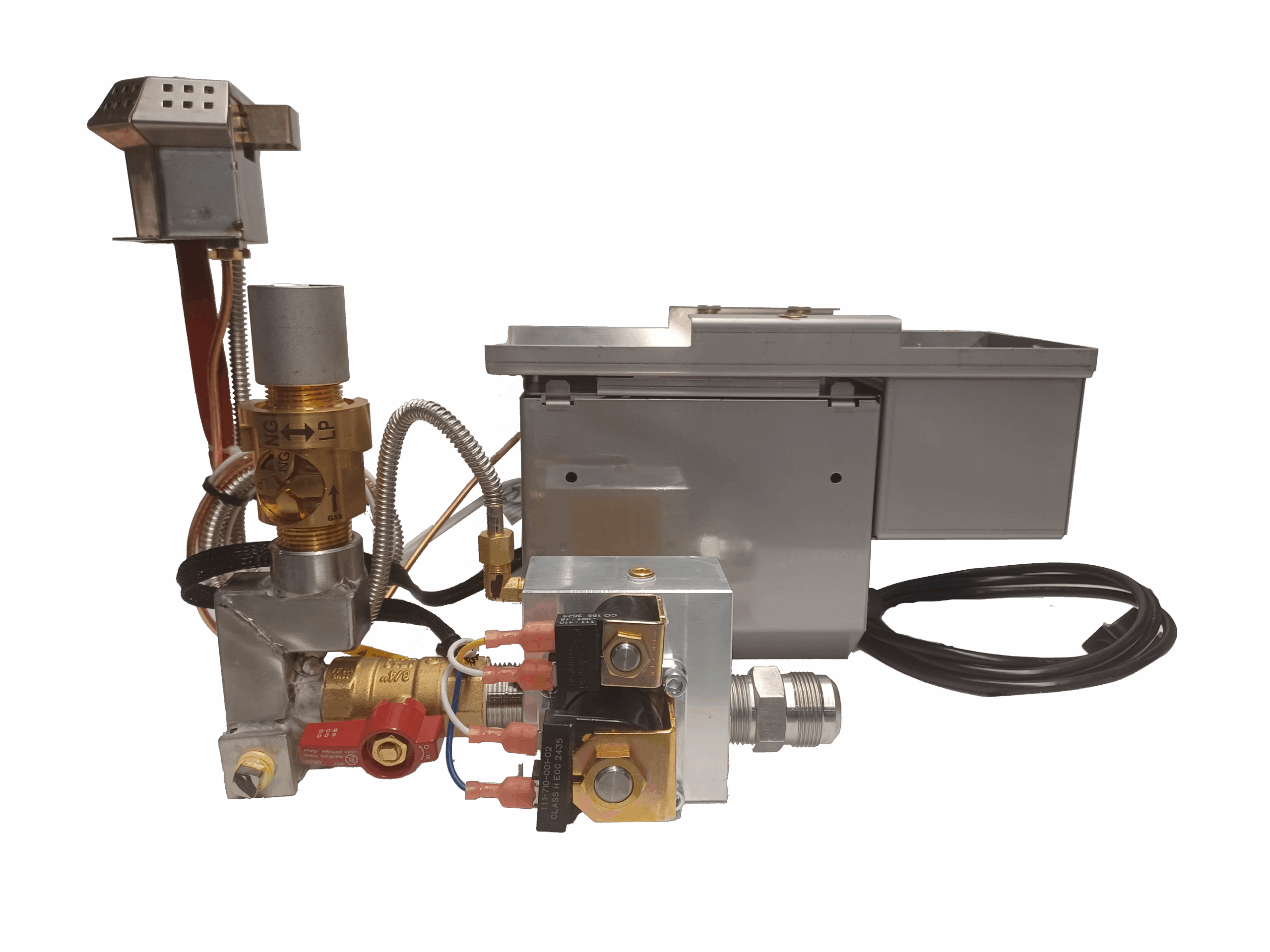
In outdoor gas fire features, the quality of the flame and the safety of the entire system is contingent on precise control of gas flow. This goes far beyond simply switching the gas on and off; it involves ensuring safe ignition, supporting a stable flame, meeting code requirements, and delivering a smooth user experience. At HPC Fire Inspired, flame design begins at its source, with careful engineering of how the gas source is managed and safeguarded before ignition even occurs. In this technical discussion, we will look beneath the flame to explore why gas flow control is the foundation of both performance and safety.
The Three Core Gas Flow Components
1. Manual ball valves (Match-Lit “MLFPK”)
Simple quarter turn manual valve using a bored sphere to allow or stop gas flow instantly.
Best use in fire features:
· Primary manual shutoff
· Maintenance isolation
· Emergency gas control
Technical Advantages:
· Highly durable and long service life
· Fast, intuitive operation
· Full-port designs minimize pressure loss
Ball valves are your first line of control—simple, reliable, and essential for every installation. Used as either a gas line shutoff or as manual ignition for HPC’s low BTU Match-Lit units.
2. Safety Pilot Valves (Manual Ignition “FPPK”)
A thermocouple-based safety system that uses a standing pilot flame to monitor and control gas flow. If the pilot flame is extinguished, the system automatically shuts off the gas source that supplies the main burner. The system does not require power and adds flame sensing to your HPC fire feature.
Best use in fire features:
· Manual ignition systems
· Installations without electrical power
· Applications requiring continuous flame monitoring
Technical Advantages:
· No external power required
· Highly reliable and field-proven
· Continuous flame verification
Safety pilot systems are the mechanical guardians of the flame—simple, dependable, and critical in non-powered installations. Adding a safety pilot to non-powered fire features adds flexibility and safety to any HPC fire feature design.
3. Solenoid Valves (electronic Ignition “EI”)
A electromechanical device that uses an electrical current to automatically open or close a valve, allowing or stopping the flow of gas to HPC’s electronic ignition fire features.
Best use in fire features:
· Electronic ignition systems
· Remote or smart-controlled fire features
· Emergency shutoff integration
Technical Advantages:
· Rapid response time
· Enables full system automation
· Typically configured as normally closed for fail-safe operation
Used strictly with electronic ignition fire features, solenoid valves act as the execution arm of the control system safely delivering gas only when conditions are safe and commanded. With seamless user experience and added safety components, solenoid valves make HPC’s electronic ignition units the safest and most reliant units used for any fire feature design.
In fire feature design, performance may draw attention, but safety is what builds lasting trust. Ball valves offer simple, precise gas control, while safety pilot valves add an extra layer of protection through flame sensing, and solenoid valves provide automatic shutoff security. Each of these solutions contributes to a fire feature that not only performs beautifully, but operates with confidence, reliability, and safety at its core. HPC Fire Inspired systems are built to perform flawlessly and safeguard continuously so you can focus on creating exceptional outdoor experiences.
HPC Fire Inspired stands at the forefront of the industry, delivering fire solutions grounded in sound engineering and built with premium materials that consistently prove their performance over time. Tried, true, and trusted, HPC is your reliable partner for outdoor fire features—contact HPC Fire at 937-436-9800 for all your outdoor needs.