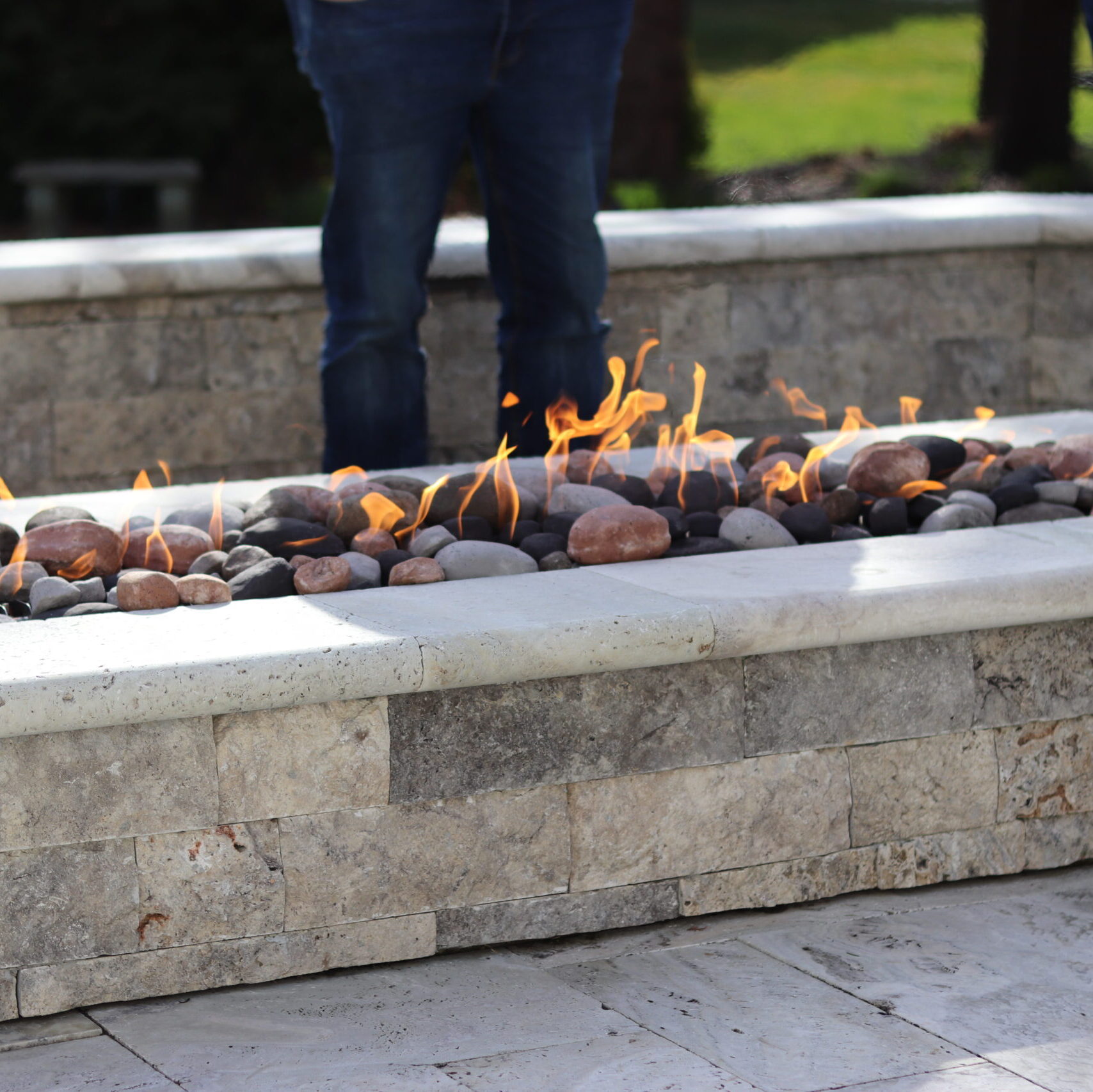
At HPC Fire Inspired, gas pressure is not just another specification, it is a core design principle. HPC’s engineering team has carefully curated each burner system to run within exact pressure parameters, delivering consistent flame appearance, dependable ignition, and lasting performance.
By understanding and applying the fundamentals of gas pressure, designers, installers, and specifiers can move past guesswork and achieve reliable, repeatable results in the field
Understanding Water Column (WC), Regulator Selection, and Performance Impact
Designing a high-performing outdoor gas fire feature starts with one critical but often misunderstood—variable: gas pressure. Whether you are specifying a residential fire pit or engineering a large commercial installation, understanding how pressure is measured, controlled, and applied is essential to achieving consistent ignition, stable flames, and safe operation.
What is Water Column (WC)?
In gas systems, pressure is typically measured in inches of water column (WC), a unit that represents the force needed to raise a column of water by a specific height.
- 1 PSI = 27.7 inches WC
For outdoor fire features, the most common pressure ranges are:
• Natural Gas (NG): 3.5″–7″ WC
• Propane (LP): 8″–11″ WC
These relatively low pressures are ideal for controlled combustion in open-air environments, helping ensure stable, predictable flames while avoiding the safety risks and erratic behavior associated with excessive pressure
Why Gas Pressure Matters
HPC’s Engineered burner porting and pressure tuning ensure optimal flame presentation across varying environmental conditions. Gas pressure directly influences three key aspects of fire feature performance:
- Flame Height & Appearance
Higher pressure increases gas flow, producing taller, more aggressive flames. Lower pressure results in softer, smaller flames. However, more is not always better—excess pressure can create lifting flames or “blow-off” conditions.
- Combustion Quality
Proper pressure ensures the correct air-to-fuel ratio, which is critical for clean combustion.
- Too low → weak flame, potential ignition failure
- Too high → incomplete combustion, soot formation
- System Reliability
Consistent pressure is essential for ignition systems, especially electronic systems that rely on precise gas delivery for flame sensing and rectification.
Regulator Selection: The Control Point
HPC systems are designed to operate within precise WC ranges, reducing field variability and improving install success rates. A gas regulator is responsible for reducing and stabilizing incoming gas pressure to a usable level for the appliance. Although reliable means of reducing gas line pressure to usable levels, there are a few key considerations to keep in mind when specifying a gas line regulator:
Inlet vs. Outlet Pressure
- Ensure the regulator can handle the supply pressure (tank or utility line) and deliver the required WC for the burner.
BTU Capacity
- The regulator must support the total BTU demand of the fire feature.
- Undersized regulators restrict flow, leading to poor flame performance.
Single-Stage vs. Two-Stage Regulators
- Single stage: Common for smaller residential systems
- Two-stage: Ideal for larger or commercial installations requiring precise control
Venting Requirements
- Regulators must be properly vented and positioned to prevent water intrusion—especially in outdoor environments
Pressure + Flow = Performance
Gas pressure alone does not tell the whole story, flow rate (BTUs) and line sizing work together with pressure to influence system output. A properly designed system balances several factors:
- Supply pressure
- Pipe diameter and length
- Burner demand
Undersized gas lines can cause pressure drop, even if the regulator is specified correctly. This causes weak flames and inconsistent performance at the burner.
Common Field Issues
Even well-designed systems can experience pressure-related problems if installation details are overlooked. Here are some common pitfalls that impact performance.
- Pressure Drop Over Distance
Long gas runs without proper sizing reduce available WC at the burner.
- Improper Regulator Placement
Installing regulators too close to heat or in enclosed spaces can affect performance and safety.
- Debris or Moisture in Gas Lines
Can restrict flow or damage regulators and valves.
- Incorrect Fuel Type Configuration
Using a natural gas setup on propane or vice versa can lead to performance issues if proper adjustments are not made.
Best Practices for Optimal Performance
- Always verify inlet and outlet pressure with a manometer during installation
- Match regulator capacity to total BTU load—not just burner size
- Account for environmental factors like elevation and temperature
- Design for accessibility to allow future diagnostics and adjustments
- Use high-quality components rated for outdoor use and long-term durability
Gas pressure is the unseen force behind every successful outdoor fire feature. When it’s properly understood and controlled, it ensures consistent ignition, stable and visually appealing flames, and safe, efficient operation. Get the pressure right—and everything else falls into place.
If you need guidance, the certified experts at HPC are ready to help. Call 937-436-9800 for trusted support and proven solutions.