The right fire pit can transform an outdoor space into a welcoming destination for relaxation, entertaining, and year-round enjoyment. But before choosing a fire feature, homeowners face one crucial decision: gas or wood burning? Each offers a distinct experience. Wood-burning fire pits create the timeless ambiance of a campfire, complete with crackling sounds and the natural aroma of burning wood. Gas fire features deliver convenience, consistent performance, and greater control over the flame.
Which choice is right for your outdoor space?
The answer depends on how consumers plan to use the fire feature, maintenance preferences, and the outdoor living experience the user wants to create.
Let us explore the key differences between gas and wood-burning fire pits to help consumers make an informed decision and find the best fit for the user’s home and lifestyle.
Convenience and Ease of Use
Gas Fire Pits: Convenience at the Push of a Button
One of the most significant differences between gas and wood-burning fire pits is ease of operation.
Gas fire features are designed to offer convenient, straightforward operation. Depending on the ignition system, homeowners can start a fire with a control knob, push-button ignition, wall switch, or remote control. Compatible systems may also integrate with smart-home technology or outdoor living controls.
Once properly installed, gas fire features eliminate the need to gather firewood, build a fire, or continually add fuel. Many models also allow homeowners to adjust flame height to achieve their preferred appearance and heat output.
For homeowners who frequently entertain or simply want to enjoy an outdoor fire without the preparation and maintenance associated with wood, gas offers a distinct convenience advantage.
Wood Fire Pits: The Traditional Campfire Experience
Wood-burning fire pits require more preparation and ongoing attention. Homeowners must gather or purchase firewood, build the fire, establish a consistent burn, and periodically add wood to maintain it.
Firewood quality and moisture content also affect ignition, flame consistency, and overall performance. As the wood burns, flame intensity naturally changes, requiring periodic attention to maintain a controlled fire.
For many homeowners, however, this hands-on process is part of the appeal. Building and tending a fire can be an enjoyable outdoor activity that recreates the familiar experience of a traditional campfire.
The takeaway: Gas is generally the better choice for convenience, ease of operation, and flame control. Wood is ideal for homeowners who enjoy the traditional process of building and tending a fire.
Flame Appearance, Ambiance, and Outdoor Experience
A fire feature is more than a source of heat. It often serves as the visual centerpiece of an outdoor living space. Although both gas and wood create an inviting atmosphere, their flame characteristics and overall experiences differ.
Gas Fire Pits: Controlled Flames and Design Flexibility
Gas fire features provide a controlled, consistent flame presentation with flexibility in design and appearance. Burner configuration, fuel type, gas pressure, and decorative media all influence the finished look.
Homeowners and designers can choose from a variety of burner styles and decorative media, including fire glass, lava rock, ceramic river rock, and decorative logs, to complement the surrounding outdoor environment.
For example, HPC Fire Inspired’s Penta Burner features a distinctive five-lobed design engineered to distribute flames across the burner, creating a natural-looking flame pattern from multiple viewing angles.
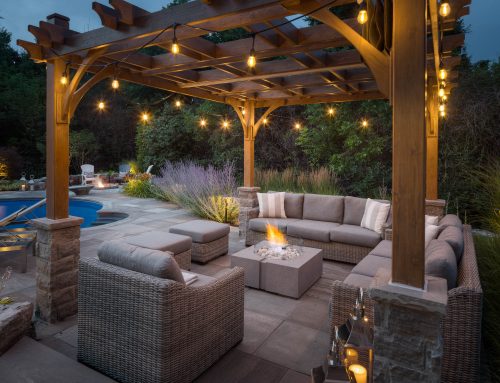
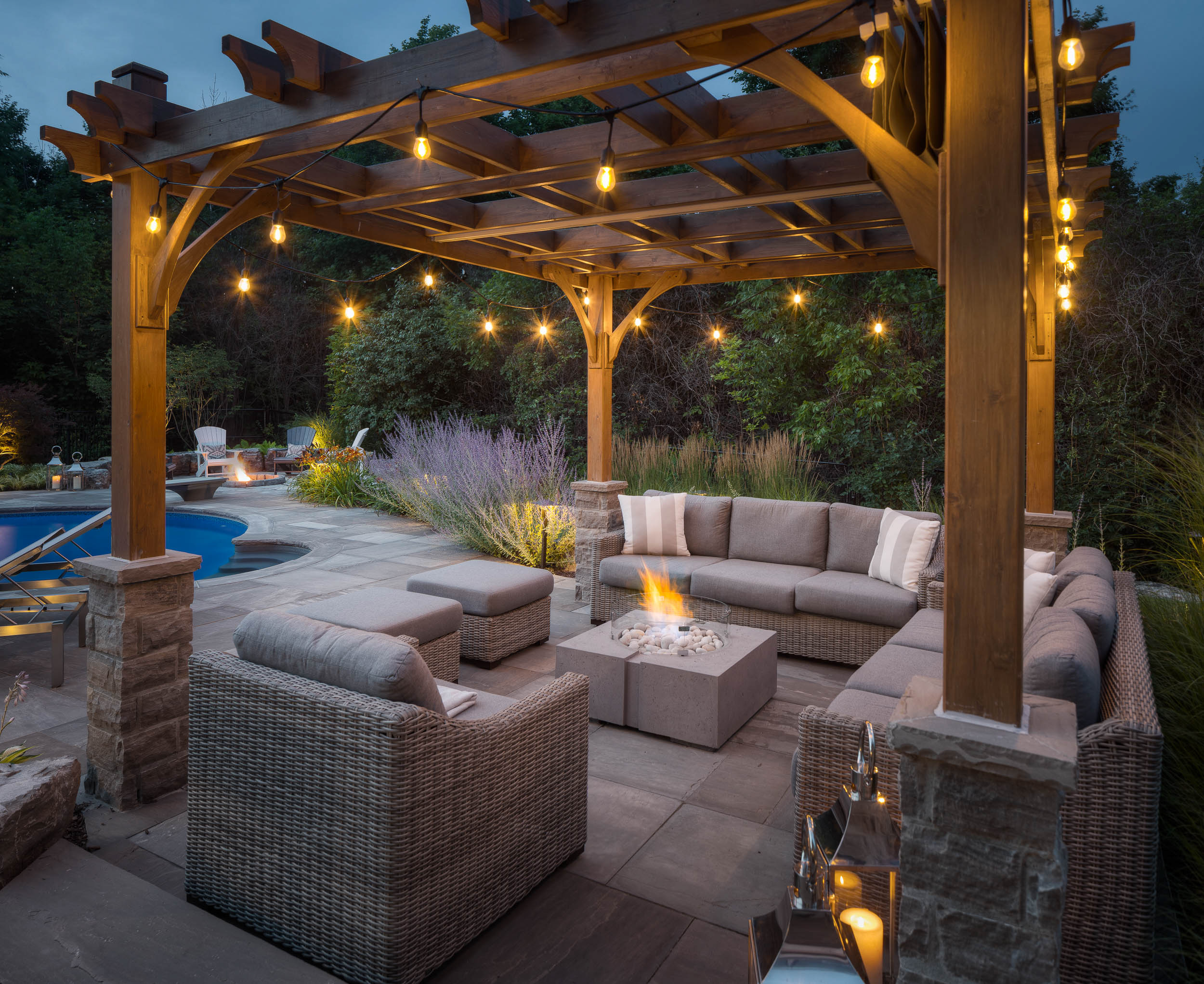
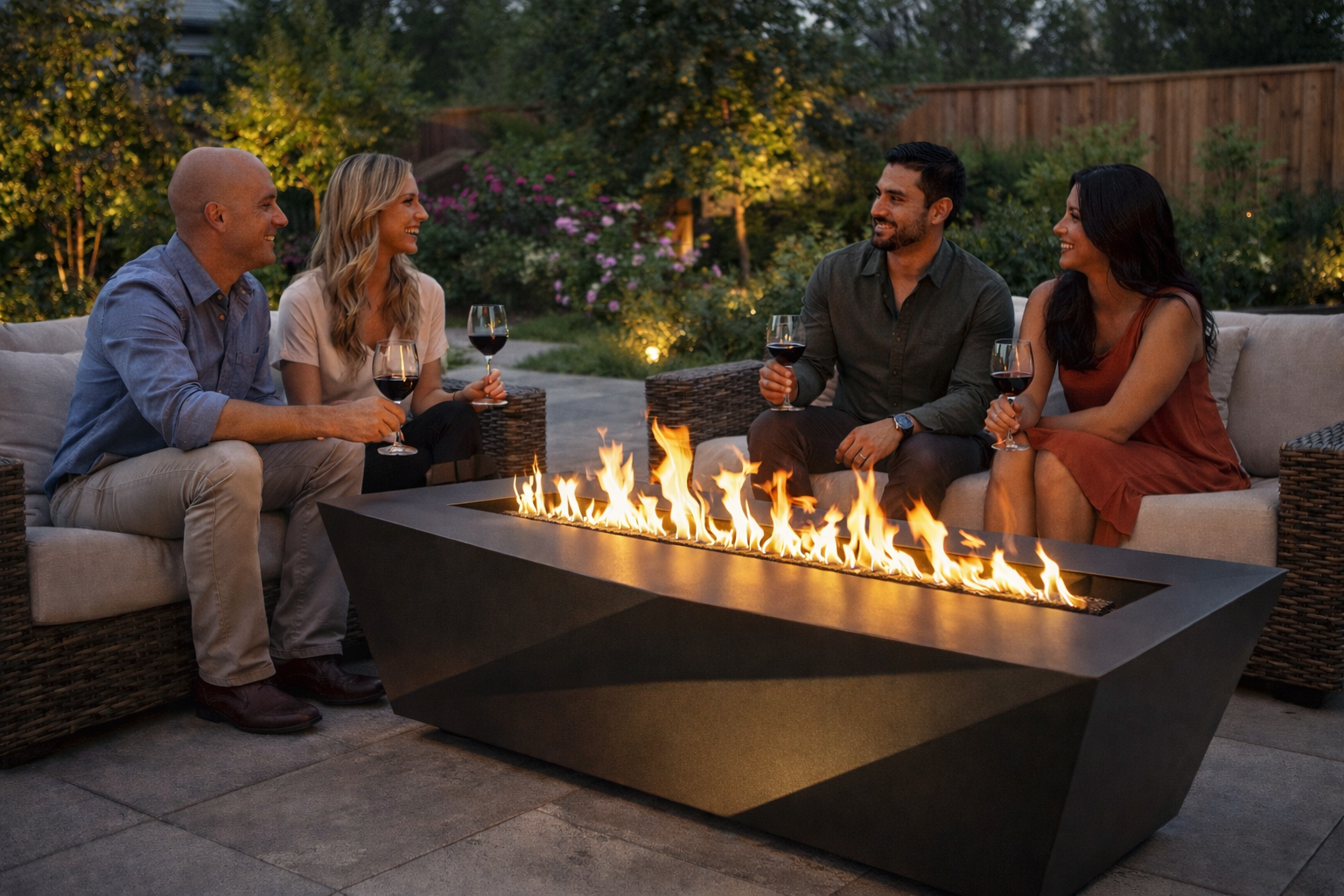
Gas fire features are also available in a variety of shapes and sizes, including round, square, rectangular, and linear configurations. This versatility allows homeowners, landscape designers, and outdoor living professionals to incorporate fire into patios, outdoor kitchens, seating areas, and custom architectural applications.
Wood Fire Pits: Natural and Traditional Ambiance
Wood-burning fire pits deliver an outdoor experience that gas cannot fully replicate. The crackling sounds of burning wood, changing flame patterns, natural aroma, and occasional sparks contribute to the familiar atmosphere of a traditional campfire.
No two wood fires are exactly alike. Flames shift and change as logs burn, creating a naturally unpredictable appearance that many homeowners find appealing.
For those who value the sights, sounds, and aromas of a traditional outdoor fire, these characteristics are often the primary reasons for choosing wood.
The takeaway: Gas offers greater control over flame presentation and design flexibility, while wood delivers the authentic sights, sounds, and aromas of a traditional campfire.
Safety Considerations
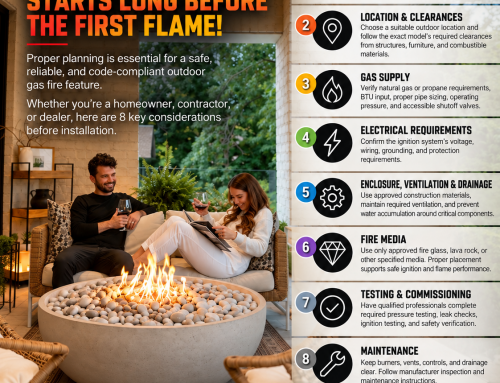
Safety should always be a priority when selecting and using an outdoor fire feature. Both gas and wood-burning fire pits involve open flames and hot temperatures. Each requires proper installation, responsible operation, and proper clearances from surrounding structures and combustible materials.
Gas Fire Pits: Engineered Fuel Delivery and Safety Controls
Gas fire features use a controlled fuel supply delivered through a system of gas piping, valves, and burner components. Depending on the appliance and ignition configuration, certain systems may incorporate safety features such as:
· Flame-sensing technology: Detects flame loss and interrupts gas flow when designed to do so.
· Automatic ignition controls: Manage the ignition sequence according to the system’s design.
· Emergency gas shutoff valves: Provide a means of stopping the fuel supply.
· Timers and operating controls: Help manage operation and provide additional control.
· Protective components: Designed to support safe operation in approved outdoor applications.
These technologies can help manage specific operating risks but do not eliminate the need for proper installation, operation, and supervision.
Gas supply lines must be correctly sized, installed, and tested. The fire feature and its ignition system must also be installed and operated according to the manufacturer’s instructions, applicable codes, and local requirements.
Wood Fire Pits: Managing Sparks, Embers, and Smoke
Wood-burning fire pits involve a less controlled combustion process. Burning wood can produce sparks, airborne embers, and shifting logs, creating additional fire hazards, particularly near buildings, combustible materials, outdoor furniture, or dry vegetation.
Smoke is another consideration, as its volume and direction can vary depending on the wood, weather conditions, and airflow.
Ash disposal also requires care. Ashes can retain heat long after visible flames have disappeared and should be handled and discarded using proper fire-safe practices.
Maintaining proper clearances, supervising the fire, and following local fire restrictions and burn bans are essential to responsible operation.
The takeaway: Gas fire features may offer added control through engineered ignition and safety systems, while wood-burning fires require more direct attention to sparks, embers, smoke, and changing combustion conditions. Neither choice is risk-free, and both require responsible operation and adherence to applicable safety requirements.
Choosing the Right Fire Feature for Your Lifestyle
The best fire feature depends on how you plan to use your outdoor space, the experience you want to create, and the level of maintenance you are comfortable managing.
A gas fire feature may be the right choice if you:
· Value convenient operation and easy ignition.
· Prefer adjustable flame height and consistent performance.
· Want less smoke and reduced cleanup compared with wood.
· Frequently entertain family and guests.
· Want to incorporate a permanent fire feature into a patio, outdoor kitchen, or custom installation.
· Appreciate a wide selection of burner designs and decorative media.
A wood-burning fire pit may be the right choice if you:
· Enjoy the traditional campfire experience.
· Appreciate the natural sounds and aroma of burning wood.
· Enjoy building and tending a fire.
· Have convenient access to firewood.
· Do not mind regular cleanup and ongoing maintenance.
· Prefer a traditional or rustic outdoor atmosphere.
Conclusion: Choose the Fire Feature That Fits Your Lifestyle
Gas and wood-burning fire pits each bring something unique to today’s outdoor living environments.
Wood offers the traditional campfire experience, complete with natural aromas, crackling sounds, and ever-changing flames. For homeowners who enjoy building and tending a fire, that experience is difficult to replicate.
Gas offers a distinct set of advantages. Convenient operation, adjustable flame height, less smoke, reduced cleanup, and extensive design flexibility make gas fire features an attractive choice for modern outdoor living spaces.
The right choice comes down to personal preference and how you want to enjoy your outdoor environment.
For homeowners who prioritize convenience, design flexibility, and ease of operation, an HPC Fire Inspired gas fire feature offers an opportunity to bring together performance, aesthetics, and functionality.
Why Consider an HPC Fire Inspired Gas Fire Feature?
For homeowners who prefer the convenience and versatility of gas, HPC Fire Inspired offers a range of outdoor fire products designed to accommodate a variety of residential outdoor living applications.
HPC’s product offerings include outdoor gas burners, inserts, ignition systems, decorative media, and components for custom fire feature installations.
One standout option is the HPC Penta Burner. Its distinctive five-lobed design promotes flame distribution across the burner, creating a natural-looking fire presentation from multiple viewing angles. Available in diverse sizes and
configurations, the Penta Burner provides flexibility for a wide range of custom fire feature designs.
HPC also offers decorative media options that allow homeowners, designers, and outdoor living professionals to customize the finished appearance to complement their surroundings.
From contemporary linear installations to traditional round fire pits, HPC gas fire products provide the flexibility to create fire features that complement the architecture, landscaping, and furnishings of an outdoor space.
More than adding a fire feature, it is about creating an outdoor gathering space that brings people together, enhances the environment, and delivers the convenience of gas operation.