HPC Fire Inspired gas fire features offer modern convenience, clean-burning, high performance, and modern aesthetic flexibility. Have you every wondered what lies beneath HPC’s beautifully designed fire appliances? At the core of every HPC’s gas fire pit is its ignition system. This mechanism is the brain that controls safely starting, adjusting, and extinguishing the flame. Understanding how ignition systems work, as well as the advantages and limitations of different types of systems, is essential for installers, designers, and end-users alike. This article provides a technical overview of the most common gas fire pit ignition systems used today, including electronic Ignition (EI), manual ignition/flame sensing (FPPK), and simple match-lit (MLFPK).
Role Of Ignition Systems:
What is the role of the ignition system, of an HPC fire feature? Our ignition systems are responsible for lighting the burner, monitoring flame presence (flame sensing) and shutting off gas flow when a flame is not detected. Choosing the correct ignition type impacts safety compliance, ease of use, maintenance requirements, and cost.
Electronic Ignition (EI)
EI units provide the highest level of safety and automation.
How Electronic Ignition Works:
The control system heats an igniter to light the pilot. Once the pilot is lit, the system senses the pilot flame through a thermocouple generating a millivolt signal. When the millivolt is satisfied the control system allows gas to flow to the burner igniting the pilot flame which lights the burner. Once the burner is lit, the pilot/thermocouple continuously monitors flame presence and automatically restarts or shuts off gas based on conditions.
Key Components of Electronic Ignition:
-
· Ignition control module
-
· Pilot assembly (flame sensing)
-
· Electronic gas valve
-
· A/C Power (120v, 24V, or 12V)
Advantages of Electronic Ignition
-
· Automatic ignition via wall switch, remote, smartphone controller, or home automation system
-
· Flame monitoring and auto-shutoff provide high safety assurance
-
· Can integrate with smart systems and building controls
-
· Auto-reignition during wind blow-out events
Limitations of Electronic Ignition:
-
· Highest upfront cost
-
· Requires electrical power
-
· Requires more maintenance
Push Button with Flame sensing (FPPK)
Flame sensing units provide flame sensing, but with manual ignition.
How Push button Flame Sensing units works:
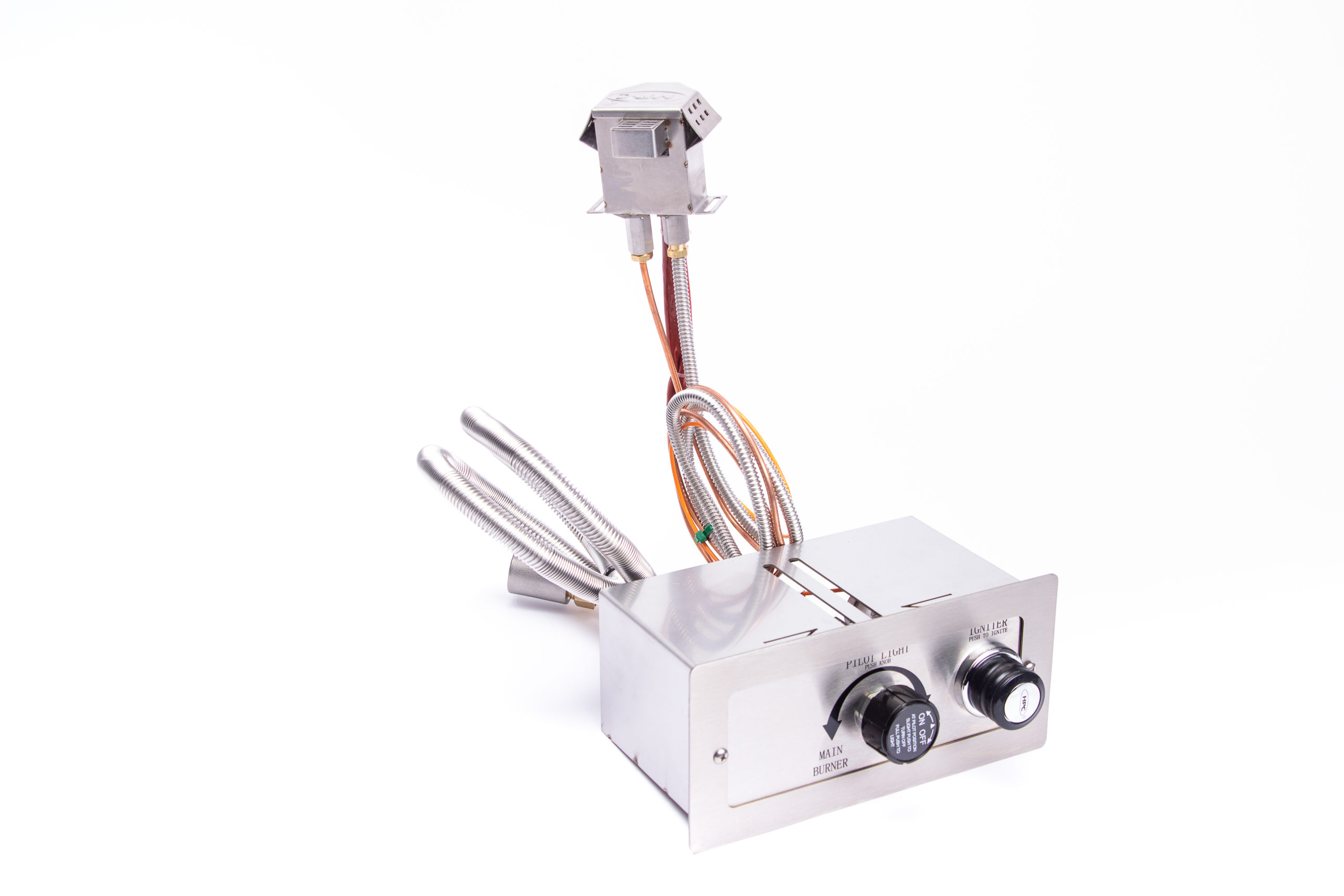
With FPPK units the the safety pilot valve is operated manually with the control knob. The control knob for the safety pilot valve is pushed in to allow gas to the pilot. The spark igniter button will be pushed to light the pilot. Once the pilot is lit, the control knob can be adjusted to control the height of the flame. While the unit is running, the thermocouple monitors the pilot flame and acts as a safety shut off.
Key Components:
-
· Safety Pilot Valve
-
· Spark Generator
-
· Pilot assembly
Advantages of Push Button Flame Sensing (FPPK)
-
· Does not require power to operate
-
· Full flame sensing via a thermocouple
-
· Flame height adjustment
Limitations of Push Button Flame Sensing (FPPK)
-
· Manual Ignition, no electronics
-
· Limited sizing of units
-
· 250K max input
Match-Lit Ignition (MLFPK)
The MLFPK is the simplest ignition system using a lighter to directly light the burner, with no flame sensing.
How It Works:
A manual decorative key valve is opened to allow gas to the burner and then is lit directly with a lighter. Simply turn the decorative key to close the valve for shut off.
Key Components:
-
· Manual Decorative key valve
-
· Flexible gas connection to the burner
-
· External lighter
Advantages of Match-Lit Ignition (MLFPK)
-
· Simple and most cost effective
-
· No power required
-
· Low maintenance and service
Limitations of the Match-Lit Ignition (MLFPK)
-
· No flame sensing, so if the unit gets blown out the burner is still releasing gas
-
· Not permitted in some commercial and residential locations
-
· All units are limited to 65K BTU
Ignition systems play a critical role in the performance, safety, and usability of HPC Fire Inspired gas fire pits. Understanding the differences between match-lit, standing pilot, and electronic ignition systems helps ensure proper selection for intended use, code compliance, and long-term reliability. By selecting the appropriate ignition type for the installation environment and user expectations, designers and installers can deliver fire features that are both beautiful, safe, and reliable.
HPC stands as the industry leader in high-end appliances, delivering exceptional performance, safety, and reliability that stand the test of time. With a commitment to quality and innovation, HPC builds lasting partnerships with consumers, turning their visions into reality and redefining excellence in every product. Contact HPC Fire Inspired at 937-436-9800.